
Lens
Government
and official.
- Sources
- FEMA · DoD · DHS · NIST · USACE · State EM plans
- Voice
- Direct, operational, directive. Written for someone briefing a decision-maker.
- Use it when
- Command authority matters. The room expects FEMA-grade language.
We are building a global multimodal AI engine for real-time disaster prediction, monitoring, and response. TerraVigil™ powers predictive intelligence and live situational awareness, while ResilientIQ™ transforms lessons learned and operational knowledge into actionable guidance for future response optimization. Watchtower™ delivers real-time risk monitoring and alerts, and FloodGrid AI™ converts FEMA flood data into machine-learning–ready intelligence. Together, these integrated systems provide end-to-end AI-driven disaster management that helps save lives, reduce costs, and strengthen long-term resilience.
ResilientIQ™ is built for the people who own the answer when something goes wrong, and the ones building the plan so it doesn't.
Running EOCs, JFOs, and incident command, where decisions move on hours, not weeks.
Police, fire, public health: leadership accountable for whole-community readiness.
Building the long-cycle plans for hazards that are getting worse, not stabilizing.
ResilientIQ™ answers emergency management questions and evaluates emergency operations plans, citing every claim. Pick an AI advisor from peer-reviewed research, authoritative guidance, or your jurisdiction's own documents, or join them for improvements grounded for any combination.
Trained on the guidance you already work from
How the corpus is built
ResilientIQ™ combines AI with manual review by domain experts to ensure only high-quality, relevant intelligence is included. Experts evaluate sources like after-action reports and operational data for credibility and real-world applicability, turning raw information into trusted, actionable knowledge for better decision-making.
Natural disasters are skyrocketing, and the tools haven't kept up.
Authoritative guidance, academic research, after-action reports, and operational data: the full surface of what the field publishes and what real responses leave behind.
Domain experts evaluate every source for credibility and real-world applicability, ensuring only high-quality, relevant intelligence is included.
Only what passes review enters the corpus, turning raw information into trusted, actionable knowledge for better decision-making.
ResilientIQ™ separates what the government says from what the research says, and lets you choose which voice to listen to.
Lens
Government
and official.
Lens
Research
and scholarship.
Lens · Default
Synthesized.
Disagreements surfaced.
// designed for nims-aligned workflows. reviewed by advisors from fema and noaa.
When you're 36 hours from landfall and need to know the unified command activation threshold for a multi-agency flood response, ResilientIQ™ gives you the traceable, authoritative answer in seconds.
Real questions from emergency managers. Real guidance answers with class-tagged citations. Toggle the lens to see how the same query reads from authoritative versus academic sources.
// scroll down to see a live query demonstration
All answers cited inline and class-tagged
Urban flooding evacuation in dense metropolitan areas requires layered decision-making: pre-event triggers tied to NWS forecast products, real-time inundation modeling, and traffic-managed egress rather than open evacuation orders.
Activate evacuation orders against published NWS Areal Flood Warning thresholds and the city's pre-defined hydrologic gauges.1 The 2024 FEMA Urban Flood Annex requires 6 hours minimum lead-time from gauge breach to mandatory order.2
Dense metros cannot use rural evacuation models. Contraflow on limited corridors paired with transit-assisted evacuation is the dominant pattern across post-2018 case studies.4
// static preview · book a live walkthrough →
Want to run your own scenarios? See ResilientIQ™ on a question that matters to your jurisdiction.
Book a DemoResilientIQ™ makes responses faster and smarter, and eliminates the waste, repeat mistakes, and slow recoveries that drag the field down.
Without ResilientIQ™
Every disaster is treated as new. Learning is slow, fragmented, and expensive.
With ResilientIQ™
Every disaster makes the next one safer, cheaper, and more effective.
How it saves lives
Faster decisions.
Surfaces what worked and what failed in past incidents, at briefing speed.
Smarter coordination.
Lessons learned linked to evacuation, sheltering, and resource placement on the ground.
Stronger preparedness.
Fewer incidents escalate to fatal outcomes when the guidance is one query away.
How it saves money
Less waste.
Automates after-action analysis. Cuts the labor and consulting overhead that piles up after every event.
Faster recovery.
Accelerates reporting and Stafford-Act reimbursement workflows so funds arrive sooner.
Smarter mitigation.
Prevents repeat damage by targeting investments where the data says they'll matter most.
ResilientIQ™ answers "what should we do?" Terra Vigil™ answers "what is about to happen?" Combining real-time hazard data, historical patterns, and computational models into assessments your planning team can act on.
Learn about Terra Vigil™ →The coordination frameworks (NIMS, ICS, NRF) are well-designed. But accessing the right guidance under pressure, fast enough to matter, is still a manual process for most emergency management teams.
AI for Natural Disasters is built to close that gap. Not by replacing the guidance, but by making it instantly accessible: cited, contextualized, and ready to brief.
AIND combines applied data science with deep operational and academic credibility. The leadership team has built and run AI products in federal government and private industry; the advisory board pulls from FEMA, NOAA, the U.S. Navy, and research institutions across the country.

Chief Executive Officer
Former CTO and U.S. Digital Services Lead at the EPA. Co-founder and first Executive Director of 18F. 2013 Presidential Innovation Fellow.
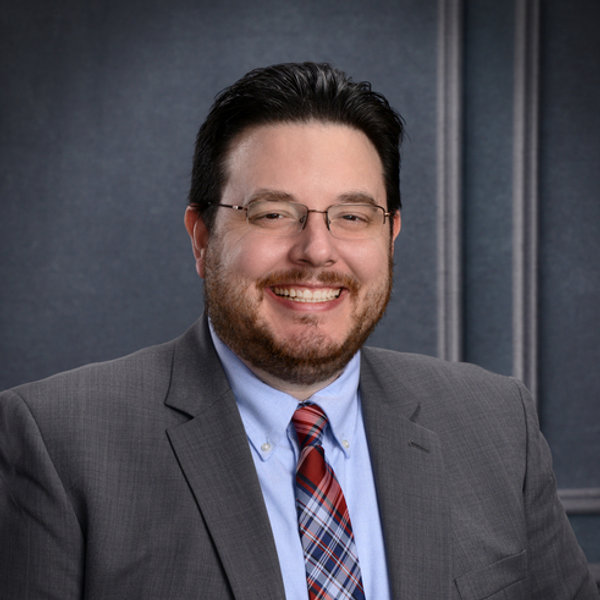
Chief Operations Officer / CAIO
Data scientist and AI expert specializing in applied data science and strategic AI deployment for high-stakes, public-sector environments.

NOAA, Weather Program Office
Acting Chief, NOAA Science, Technology & Society Division. Certified Consulting Meteorologist.

FEMA (Former), National Flood Insurance Program
20+ years in federal disaster response, recovery, and risk mitigation. Former senior advisor to the National Flood Insurance Program.

U.S. Navy, Naval Oceanography
Navy Oceanography veteran and Executive Officer for the Navy Reserve Naval Oceanography Operations Command. 25+ years of mission-driven leadership across electronic warfare, space operations, remote sensing, and data analytics.

NYU Stern Abu Dhabi
MIT PhD in Multimodal Machine Learning for Climate Adaptation. Specializes in climate risk forecasting.

William & Mary
Distinguished Professor of Business. Visiting appointments at MIT Sloan, Tsinghua University, and University of Cambridge.

William & Mary
Hays T. Watkins Distinguished Professor of Business. Research focuses on AI and information systems for digital resilience and decision-making in government and public-sector contexts.
William & Mary
Assistant Professor of Operations and Information Systems Management. Research spans business analytics, FinTech, and systems analysis, with publications in MIS Quarterly.